






New Delhi : The BRICS Bazaar 2026, curated by the National Institute of Fashion Technology (NIFT), Gandhinagar, under the leadership of Prof. Dr. Sameer Sood, Director, NIFT Gandhinagar, in consultation with the Ministry of External Affairs and the Office of the Development Commissioner (Handicrafts), brought together diverse craft traditions and creative expressions from across the BRICS community.
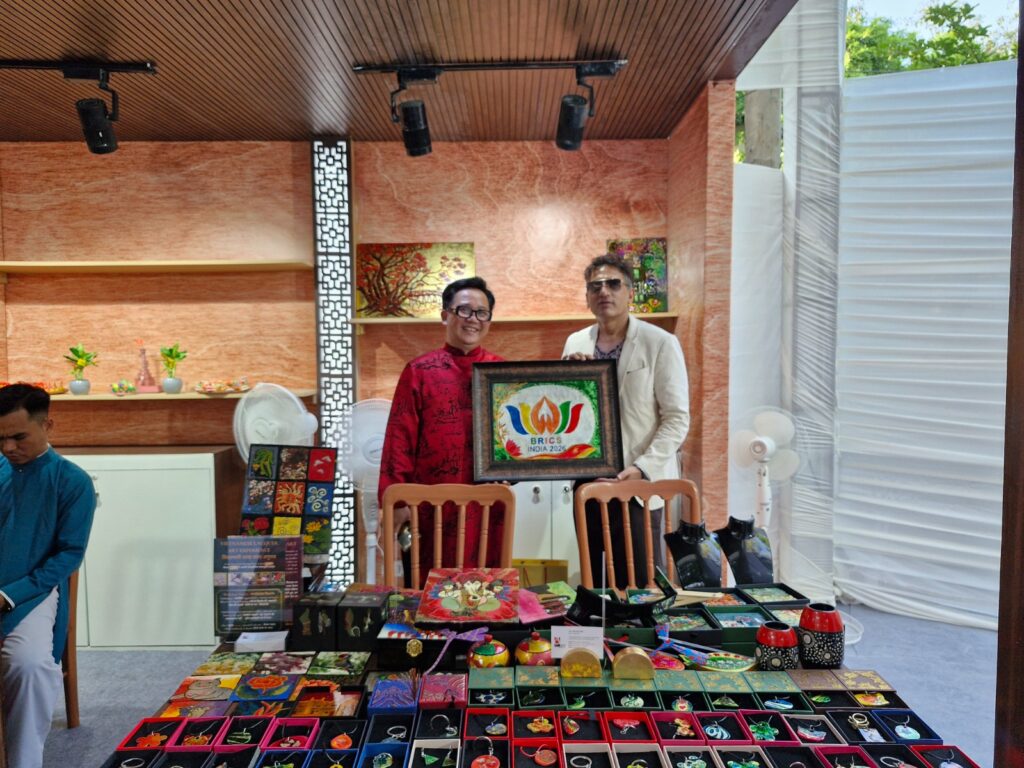
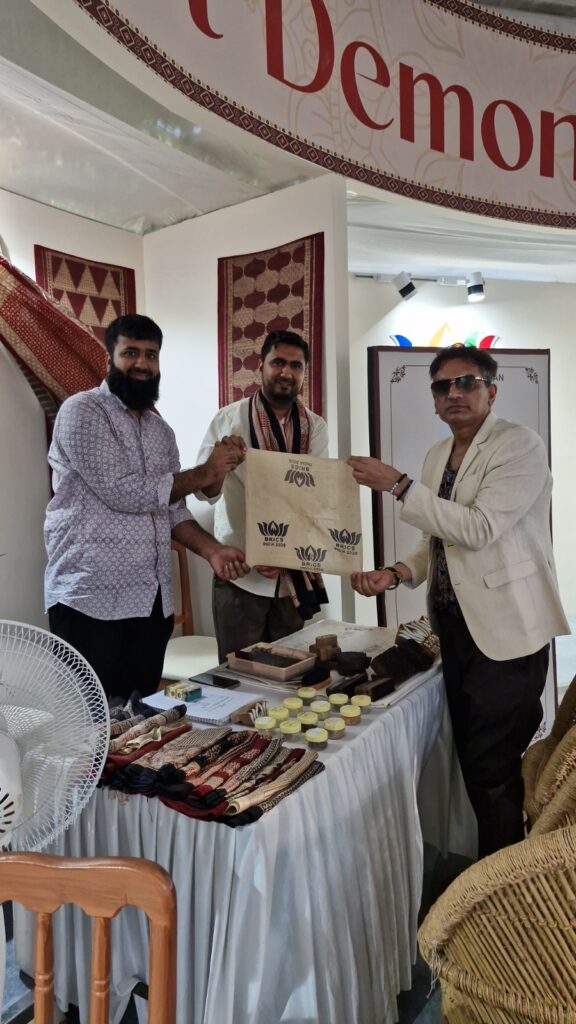
Held from September 10 to 15, 2026, at the National Crafts Museum & Hastkala Academy, New Delhi, the Bazaar was conceived as a Jan Bhagidari initiative under the theme “Crafting Cultures, Connecting People.” The initiative created a vibrant cultural marketplace showcasing authentic handicrafts, handlooms, textiles, artworks and traditional and contemporary craft products from participating BRICS Member and Partner Countries.
The Bazaar highlighted the role of culture and the creative economy in strengthening people-to-people connections while creating opportunities for artisans, designers and creative enterprises. Through craft, design and cultural exchange, the initiative brought diverse communities together and showcased the rich heritage and living traditions of participating nations.
NIFT Gandhinagar Leads Curatorial Vision
NIFT Gandhinagar was entrusted with the curation of BRICS Bazaar 2026 in consultation with the Ministry of External Affairs and the Office of the Development Commissioner (Handicrafts). Under the leadership of Prof. Dr. Sameer Sood, the Institute conceptualised the Bazaar as an immersive and experiential cultural space that went beyond conventional product displays. The curatorial approach focused on creating meaningful interactions between visitors and artisans, enabling audiences to understand the stories, techniques and cultural contexts behind the crafts. The visitor experience combined physical exhibition spaces with digital touchpoints, allowing visitors to explore the origins and processes associated with different crafts while directly engaging with participating artisans.
44 Artisans from 18 Countries Showcase Diverse Craft Traditions
A total of 44 celebrated artisans from 18 countries participated in BRICS Bazaar 2026. The participating countries were Belarus, Bolivia, Brazil, China, Cuba, Egypt, Ethiopia, India, Indonesia, Iran, Kazakhstan, Malaysia, Nigeria, Russia, South Africa, Uganda, Uzbekistan and Viet Nam. The participating artisans showcased a wide range of craft traditions, including handcrafted textiles, willow weaving, beadwork, lacquer art, eco-printing, papier-mâché, pottery, weaving, easel painting, figurine craft, hand modelling, Gzhel ceramics, wood and calabash art, batik and hot enamelling, among others. The exhibition highlighted not only the diversity of materials and techniques but also the cultural knowledge, creativity and traditional practices sustained by artisan communities across the participating countries.
Exhibition Design Blends Craft with Digital Storytelling
NIFT Gandhinagar designed customised exhibition stalls for participating artisans, with each space developed to complement the distinctive character, materials and visual language of the respective craft. Dedicated panels provided information about the artisans and their craft traditions, while QR codes enabled visitors to access additional information, including artisan profiles, craft details and contact information. The integration of physical displays with digital storytelling offered visitors a deeper understanding of the people, processes and cultural narratives behind the exhibited works. The digital repository of participating artisans and crafts was also made available through the official BRICS India 2026 platform.
Thematic Installations Highlight Unity and Cultural Connections
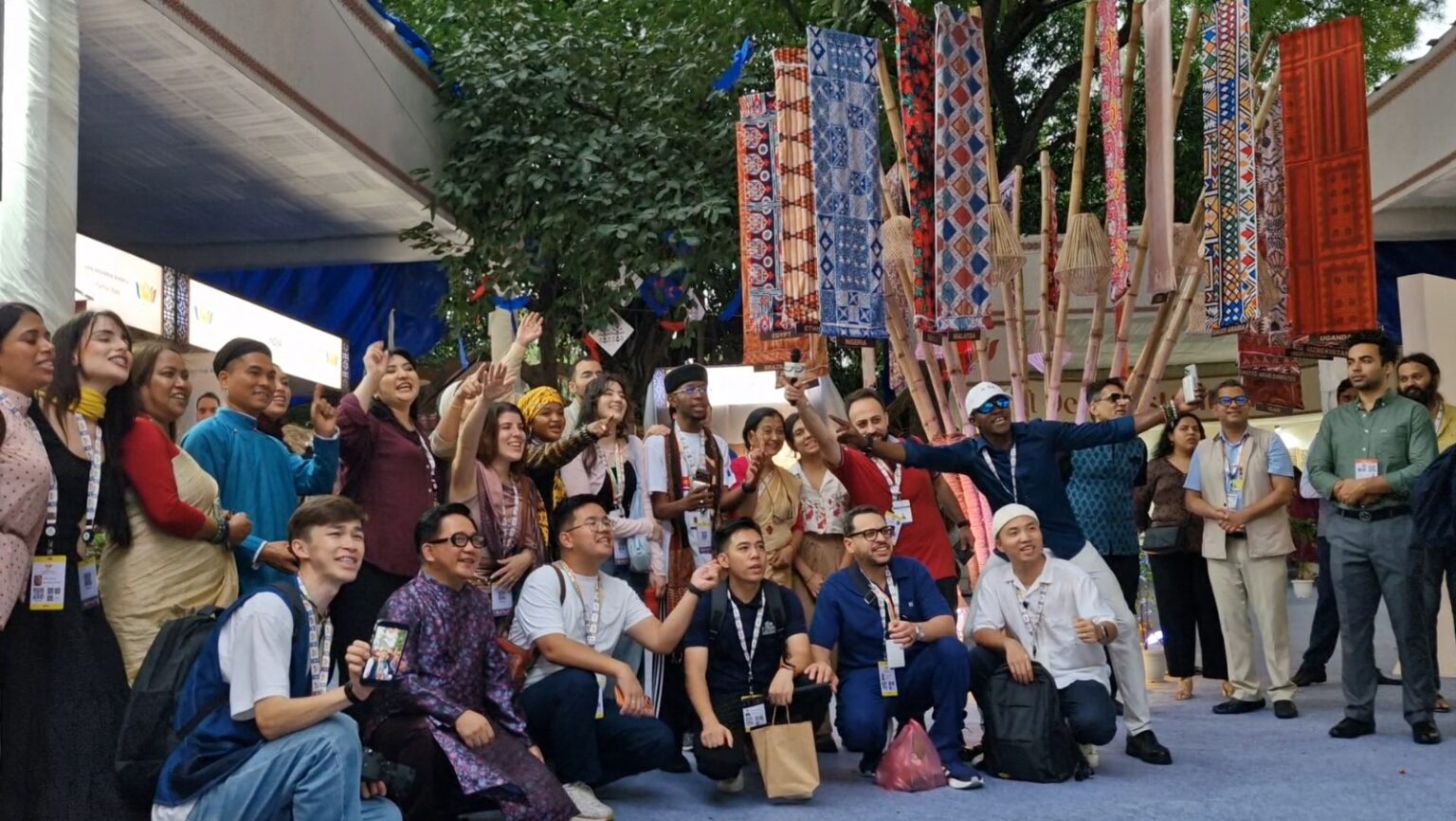
A major feature of the Bazaar was a series of thematic installations curated by NIFT Gandhinagar, interpreting BRICS cooperation through craft, visual narratives and cultural diversity. “Confluence: Patterns of Unity” presented a visual representation of unity through 21 distinctive patterns inspired by the craft heritage and visual traditions of the 21 BRICS Member and Partner Countries. The patterns were brought together into a cohesive composition symbolising diversity, dialogue and interconnectedness.
“Convergence: Cultures Woven Together” used weaving as a metaphor for cultural convergence. A drape featuring woven BRICS logos represented the interlacing of different identities, histories and traditions into a shared tapestry of cooperation. The third installation, “Co-existence: Tree of Life,” drew inspiration from the Tree of Life motif found across cultures. It represented interconnectedness, continuity, harmony and the interdependence of cultures, communities and the natural world.
Live Craft Demonstrations Bring Traditions to Life
The Bazaar also featured live craft demonstrations, giving visitors an opportunity to observe traditional techniques and interact directly with artisans. Demonstrations included block printing from Madhya Pradesh, lac bangles from Rajasthan, papier-mâché from Kashmir and terracotta from Rajasthan. The interactive sessions allowed visitors to gain first-hand insights into traditional craftsmanship and, in selected experiences, participate in the creation of craft products. These activities reinforced the idea of craft as a living practice rather than simply an object of exhibition.
Craft as a Medium of Cultural Exchange
Through its curated exhibition, thematic installations, digital storytelling and live demonstrations, BRICS Bazaar 2026 created a platform for cultural dialogue and public engagement. The initiative placed artisans, craftsmanship and creative heritage at the centre of the BRICS cultural experience, reflecting the spirit of Jan Bhagidari and bringing international cultural exchange closer to the public.
With “Crafting Cultures, Connecting People” as its central theme, BRICS Bazaar 2026 demonstrated how traditional craftsmanship can serve as a powerful medium for fostering understanding, creativity and connections across borders. The Bazaar ultimately celebrated the diversity of cultures represented within the BRICS community while highlighting the shared human connections expressed through craft, creativity and cultural heritage.
Key Highlights
- Venue: National Crafts Museum & Hastkala Academy, New Delhi
- Dates: September 10–15, 2026
- Curated by: NIFT Gandhinagar
- Leadership: Prof. Dr. Sameer Sood, Director, NIFT Gandhinagar
- Participating Countries: 18
- Participating Artisans: 44
- Theme: Crafting Cultures, Connecting People
- Format: Craft exhibition, thematic installations, digital storytelling, live demonstrations and cultural engagement
- Initiative: Jan Bhagidari